


Editorial date: October 15, 2026. First added to RigPeak: November 20, 2026. Updated November 20, 2026. This guide is based on the cited documentation and editorial analysis; it is not a hands-on test report.
Ragnarok Online: World Journey offers familiar Ragnarok imagery, but you should learn the systems of this edition before applying a build from another game in the series.
This English-language guide covers Gravity Game Vision's regional RO仙境傳説:世界之旅, identified by the Android package com.ggv.roworld.aos. The official regional listing establishes that edition. English explanations here do not imply that every server uses the same English interface.
1. Choose a job by its everyday role
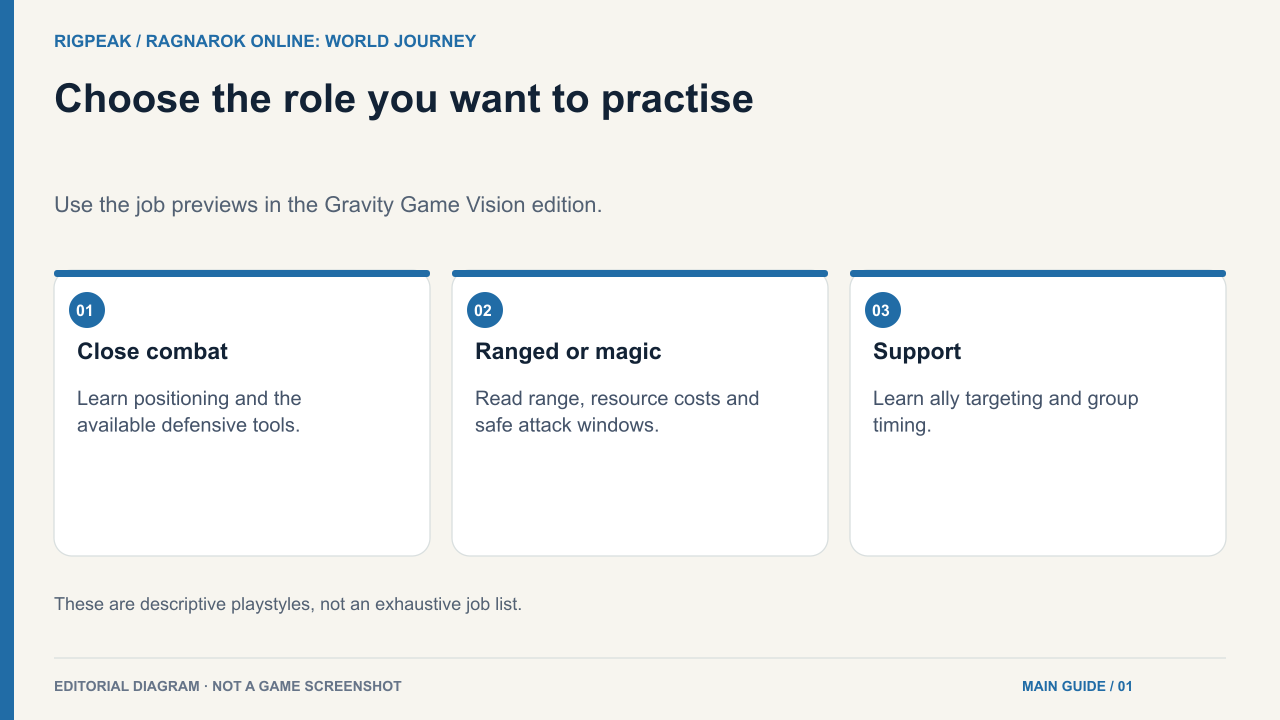
Open the job previews and compare the skills you will actually use. Decide whether you prefer close combat, ranged attacks, spellcasting or a support role. Then inspect the relevant advancement path in your client.
Familiar names can help you orient yourself: Swordsman, Mage, Archer, Acolyte, Thief and Merchant belong to recognizable Ragnarok class families. Availability also extends beyond that familiar starting list as the edition evolves. Use the current selection screen rather than assuming every historical job is present.
The regional BlueStacks beginner guide discusses this game's jobs and opening progression. Its localized labels are more relevant than a build written for Ragnarok Online on a different platform.
Choose the role you want to practice. Supporting a party and clearing enemies alone are different priorities; neither is answered by a class portrait's popularity.
2. Let the opening quests introduce the map
Follow the main quest through the first locations and unlocks. Notice the destination and purpose even when automatic navigation is available. You want to recognize the town, hunting area and NPC involved when you return later.
Before leaving a quest hub, inspect the next task's actual wording. Some objectives involve interaction or collection rather than defeating more enemies. If progress stops, check the tracker and talk to the relevant NPC before moving to another hunting area.
Collect rewards after completing the step. Then check whether a new skill, equipment slot or activity has become available. The useful part of leveling is often what it lets you do next.
3. Build skills around a small combat plan
Start by identifying three things in your selected job: the attack you use frequently, the skill that changes how an encounter plays out, and any recovery or protective option.
Read their range, resource cost and activation conditions. Arrange frequently used controls where you can reach them comfortably. Practice on normal enemies before relying on the same setup in a group encounter.
For example, a ranged character should practice keeping a useful distance while still attacking. A support-oriented character should learn which skills target allies and when those allies need help. Neither needs a speculative endgame skill order to begin learning effectively.
When a skill point becomes available, inspect what the next rank changes. Improve a skill you actually use before spreading points across every newly opened option.
4. Allocate attributes from your own skill descriptions
Do not copy a fixed stat ratio merely because the job name matches. Check which attributes your current skills and equipment use, then choose an investment that supports the role you have selected.
If your damage feels low, establish whether attacks connect reliably, whether the correct skill is equipped and whether your weapon suits the job. If survival is the problem, inspect defenses, recovery and positioning.
Before resetting a build, read the reset conditions and cost. Save a note of the old allocation so you can compare results. A change is useful when it solves a visible problem, not just when the resulting numbers look different.
5. Separate a replacement item from an upgrade investment
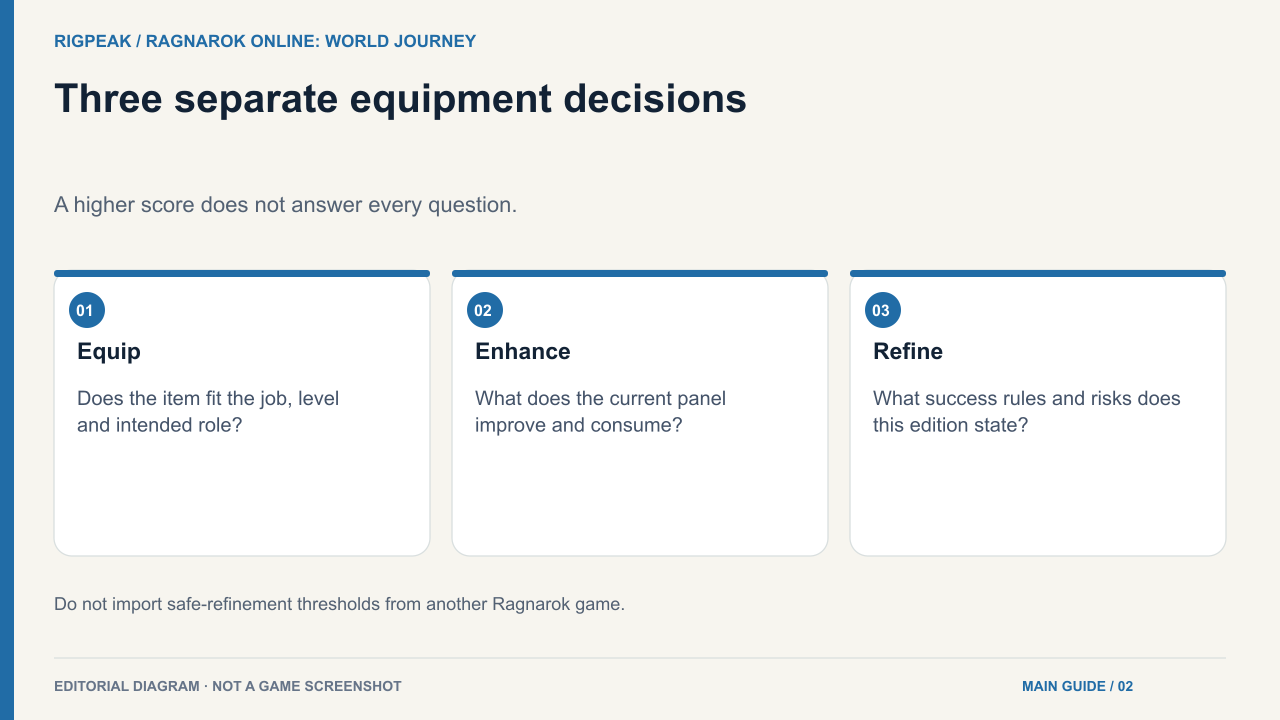
Check an item's job and level requirements first. Then compare its relevant attributes, any special effect and its relationship with the rest of your equipment.
Enhancement and refinement should be evaluated through their own panels. Read the cost, success rules and stated risks before confirming. A safe threshold from another Ragnarok title does not establish the rules here.
If you expect to replace an item soon, check whether its invested progress transfers. Keep unfamiliar items until you understand their use; avoid clearing your inventory through an automatic disposal setting you have not reviewed.
6. Prepare for group activities as a job, not a passenger
When an activity unlocks, read its entry conditions and objective. Join with a role you can describe: dealing damage, supporting allies or handling a particular mechanic.
Check equipment and recovery supplies before entry. Follow the group's target and positioning instructions. If you do not understand a boss cue, ask after the attempt instead of repeating the same mistake silently.
Social features are also part of this edition, as the official regional portal shows. Use a guild or regular group to learn the server's terminology and organize activities that fit your schedule.
End a session with one clear next goal: a quest unlock, a useful skill rank or an equipment improvement. That gives your next hunt a reason beyond watching the level bar move.