

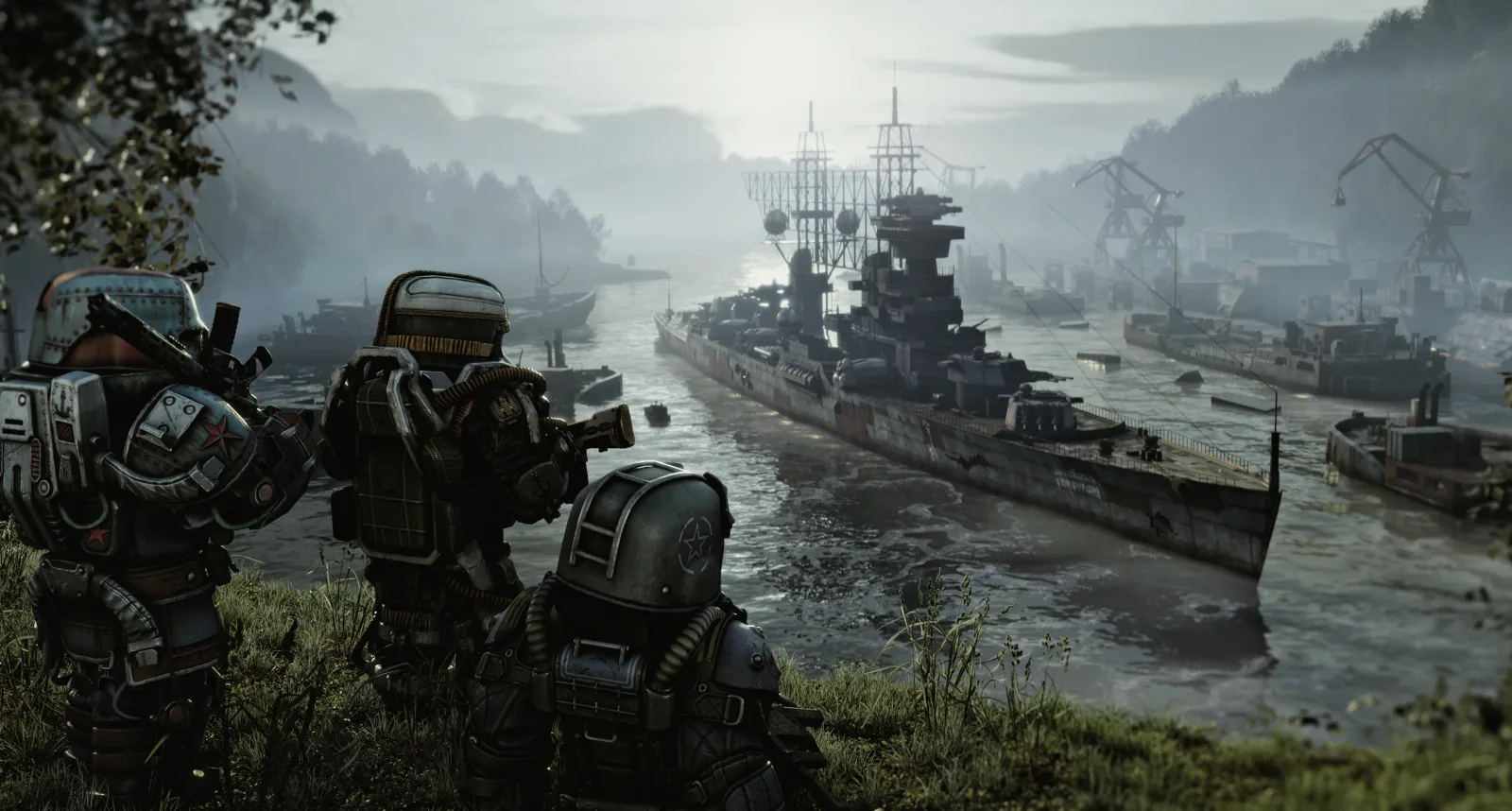
Editorial date: October 22, 2026. First added to RigPeak: November 20, 2026. Updated November 20, 2026. This guide is based on the cited documentation and editorial analysis; it is not a hands-on test report.
The first skill to learn in STALZONE is completing a trip. Reaching a quest marker is only half the job; the materials collected along the way still need to come home.
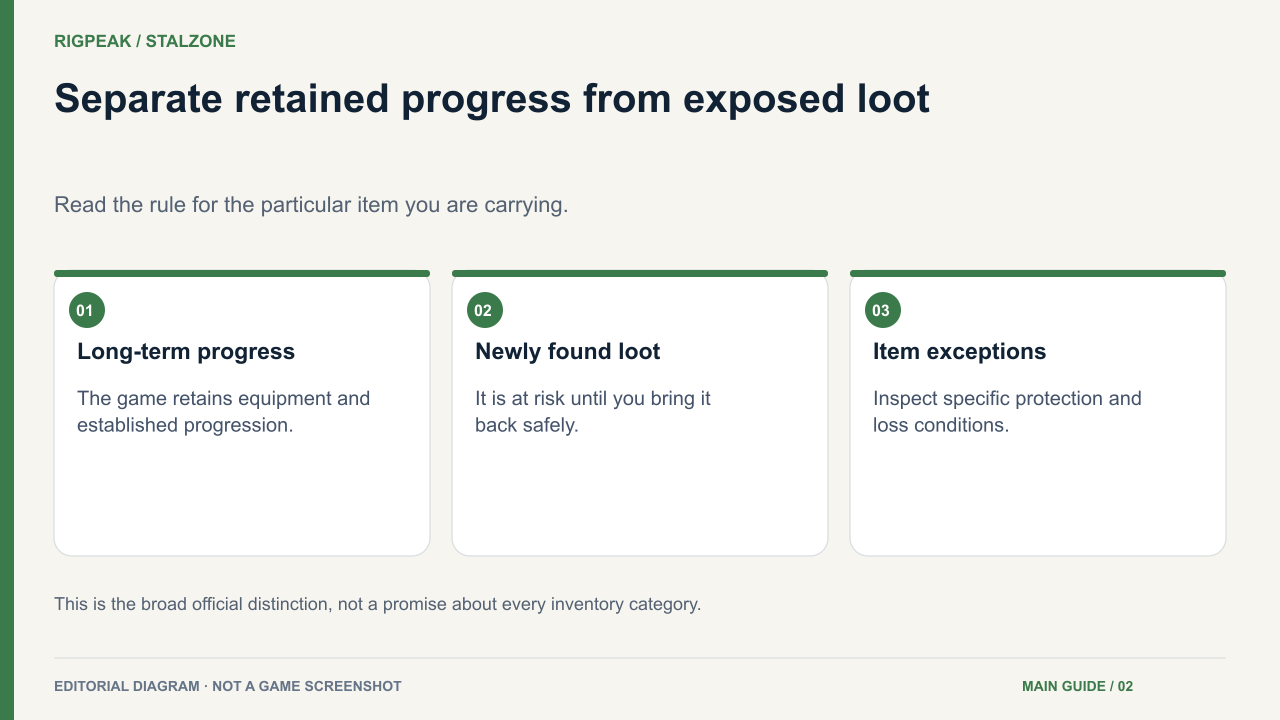
Formerly known as STALCRAFT, STALZONE combines a persistent world with PvPvE encounters. Its official description distinguishes retained equipment and long-term progress from newly collected loot that remains exposed until you return. Use that distinction to plan your opening expeditions.
1. Follow the story while learning your surroundings
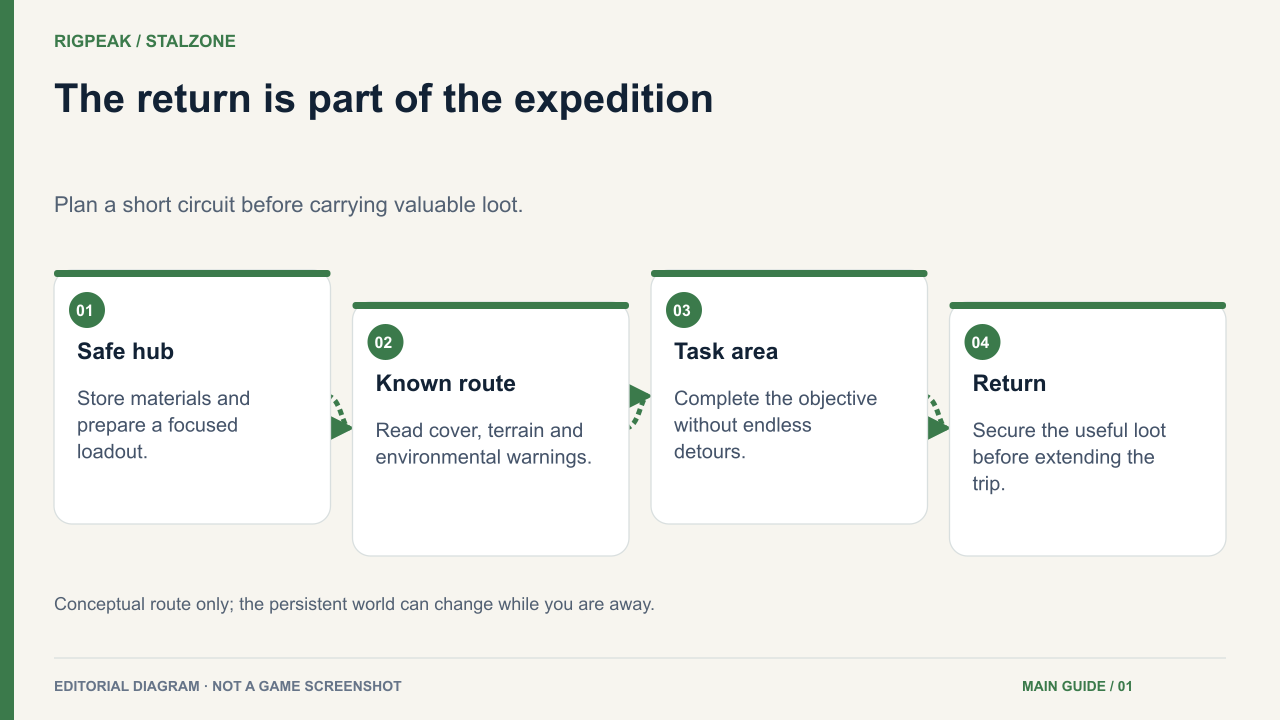
Begin with the main quests and the mechanics they introduce. As you travel, identify the safe hub, the quest location and the route between them. Learn one local circuit before trying to cross the map for every visible activity.
Study the map before leaving shelter. Look for terrain that constrains movement, places where enemies could overlook your path and any environmental warning shown by the game. Notice where you can break line of sight if a fight turns against you.
Your first successful route should be short enough to remember. Repeat it until navigation no longer consumes all your attention. Familiar ground makes it easier to notice a new threat.
2. Pack for a task, not for every possibility
Choose a single main purpose: progress a quest, collect a needed material or practice a particular encounter. Take the ammunition, recovery supplies and protection that fit that trip.
Check the weapon's ammunition type rather than filling space with incompatible rounds. Inspect armor and protective properties before entering a new environment. A higher combat number does not explain which environmental conditions your equipment can tolerate.
Leave valuable materials in the appropriate storage when the hub allows it. Read item-specific loss and protection rules; the distinction between retained gear and exposed loot is not a promise that every inventory category behaves identically.
Before departing, ask: what is the condition that makes me turn back? An inventory target, a completed objective or dwindling recovery supplies can all provide a clear answer.
3. Treat anomalies and hostile players as separate problems
Environmental hazards require observation and the tools introduced by the tutorial. Slow down in an unfamiliar area, watch warning indicators and use the appropriate detection or probing method the game has taught you.
A player encounter requires a different assessment. Consider cover, distance, escape routes and whether a prolonged fight helps your actual objective. Carrying useful loot is a reason to avoid an unnecessary duel.
Do not assume another player is harmless because neither of you has fired yet. Equally, firing first at every distant movement can reveal your position and turn a quiet return into a fight you did not need.
The aim is to make a deliberate decision while you still have options.
4. Make the return trip part of the route
Reserve enough supplies for the journey home. Returning through recently cleared terrain may be familiar, but the persistent world can change while you are away.
Avoid letting one additional loot opportunity repeatedly postpone your return. Once the expedition has delivered its purpose, the marginal reward from staying longer must be weighed against everything already carried.
For example, suppose your task is complete and you have collected a material needed for your next upgrade. Your next useful action may be storing it, not searching one more exposed area. Securing progress creates a new starting point for the following trip.
If you are defeated, identify the cause before immediately running back: an environmental hazard, a predictable route, an unsuitable loadout or a fight taken without cover.
5. Upgrade toward a defined expedition
Open the relevant equipment progression or barter interface at the hub. Inspect the requirements for one useful next item and record the missing materials.
Group compatible tasks into a route. A quest and a nearby material source may fit together; a distant detour into unfamiliar territory may not. Check current conditions before combining them.
Avoid equipping the highest-rated piece you own without reviewing the complete setup. The official game description notes that equipment strength relates to the danger players encounter. A balanced, understood loadout is more useful than treating one upgrade as protection from every threat.
Test a changed weapon or armor setup on a familiar outing before committing a valuable haul to it.
6. Use a squad to coordinate, not merely multiply noise
Agree on the destination, return condition and response to contact before leaving together. Keep enough proximity to help each other without crowding the same exposed position.
Call out useful information: direction, cover, visible threats and whether you are withdrawing. Announcing that you are “in trouble” gives teammates less to act on than describing where the danger is.
After a trip, compare what worked and what cost supplies. A good first-session result is a route you can repeat, an upgrade requirement you understand and loot safely returned. That is progress you can build on.