
Editorial date: November 4, 2026. First added to RigPeak: November 20, 2026. Updated November 20, 2026. This guide is based on the cited documentation and editorial analysis; it is not a hands-on test report.
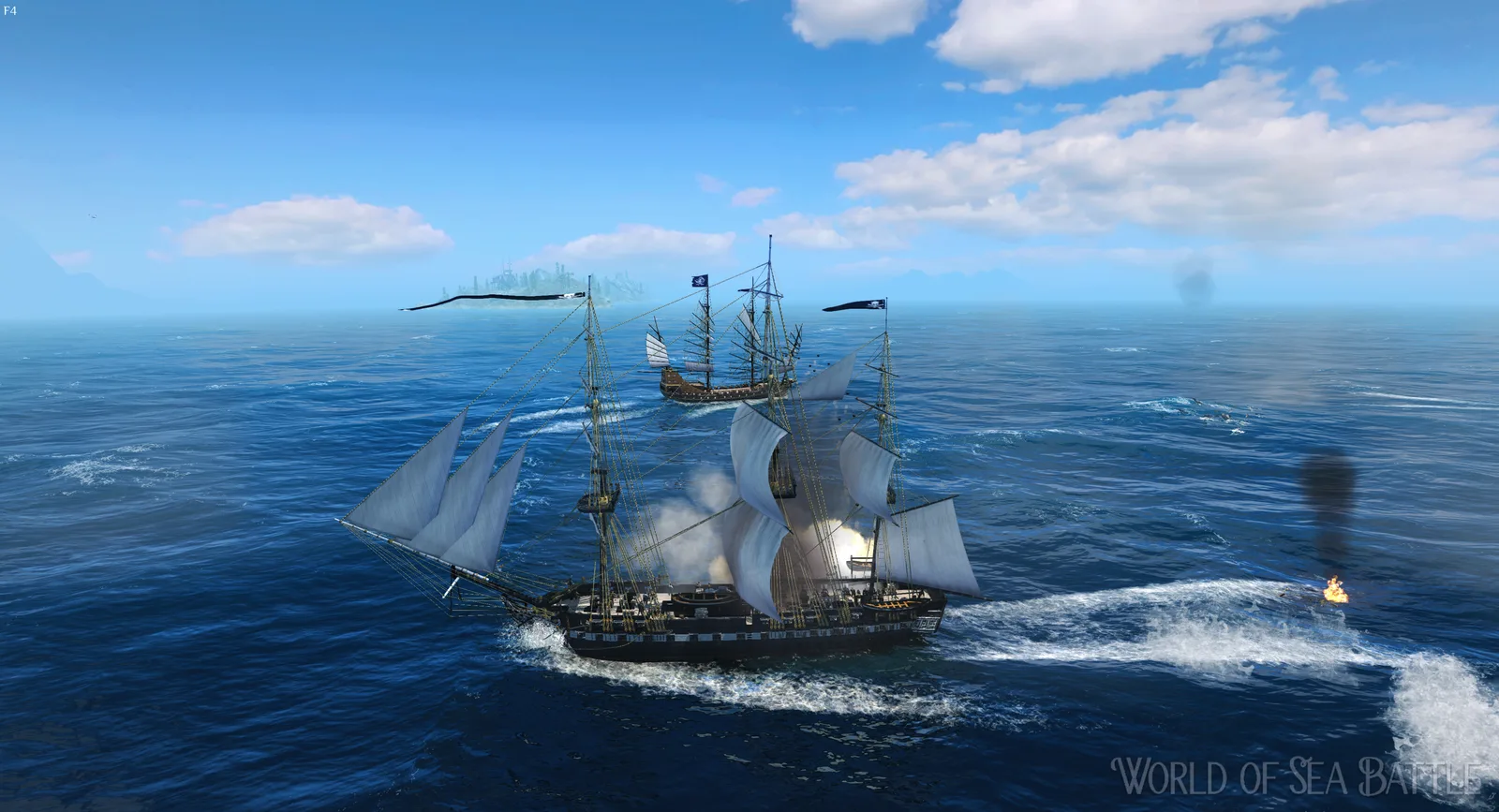
World of Sea Battle puts you directly in charge of a sailing ship in a shared world. Learning to bring your guns to bear, manage the wind and return from a voyage matters before you can make good use of a larger vessel.
Start with short trips and manageable opponents. A ship you understand is a better teacher than an expensive upgrade you cannot yet sail confidently.
Learn how your ship responds before seeking a fight
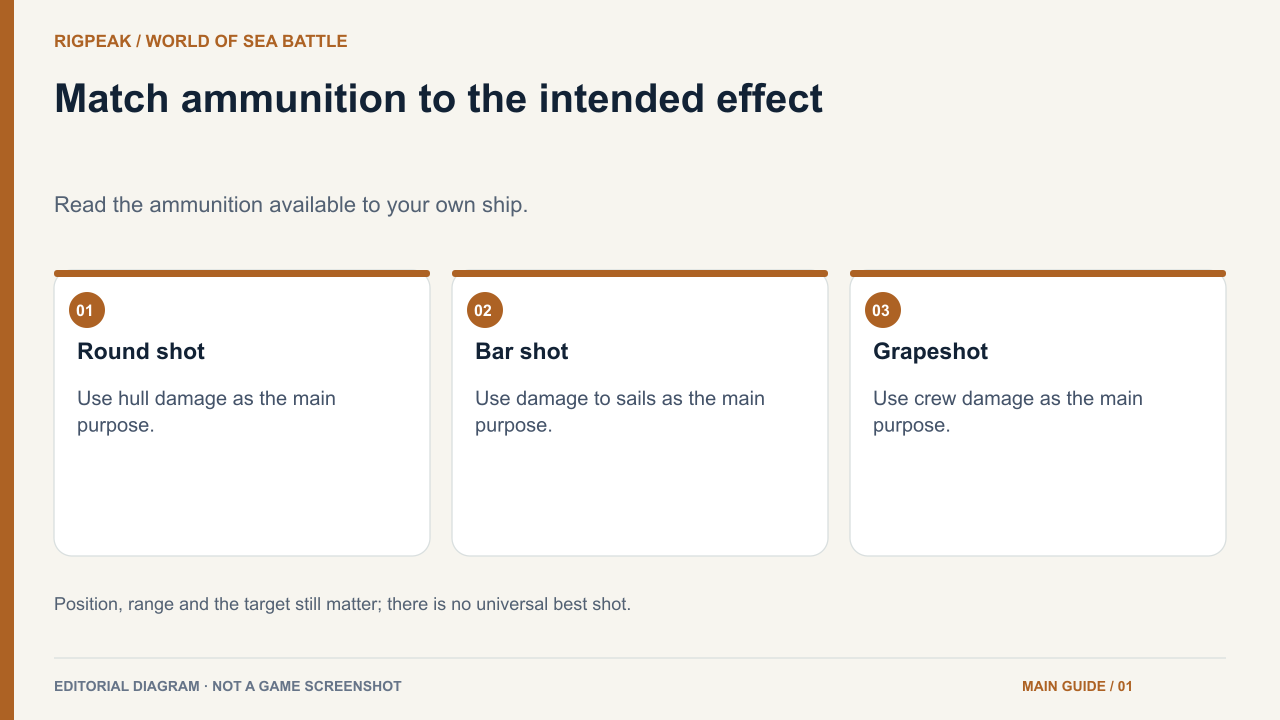
Leave port with time to practise. Watch the wind, change heading and observe the effect on speed and turning.
Then practise lining up a broadside without an enemy forcing the pace. Your ship's guns need the right orientation; pointing the bow toward a target is not the same as being ready to fire a broadside.
The developer's overview explains the link between wind, positioning and different ammunition roles. Use the current tutorial and controls to turn those principles into familiar actions.
Give the first voyage a limited purpose
Choose a nearby activity or route you can complete and return from. Identify where you are going, what you hope to gain and where you can stop afterward.
Avoid filling the hold with a speculative trade load while also planning to learn combat in unfamiliar waters. A simple trip lets you understand the ship and the economics without several risks obscuring the result.
Before leaving, inspect the resources and services relevant to your ship's condition. Check the cost of preparing it as well as the reward you hope to earn.
Fight for position before firing repeatedly
Watch the opponent's heading and your own turning room. Try to create a firing opportunity that does not leave you trapped alongside an unfavourable angle.
After firing, think about the next pass. Do you have space to turn, maintain a useful heading and bring the guns back onto the target? A rushed manoeuvre can sacrifice control for one extra shot.
If the encounter becomes unmanageable, your ability to disengage depends on the situation and your ship's condition. Do not assume every opponent can simply be outrun once you have committed too far.
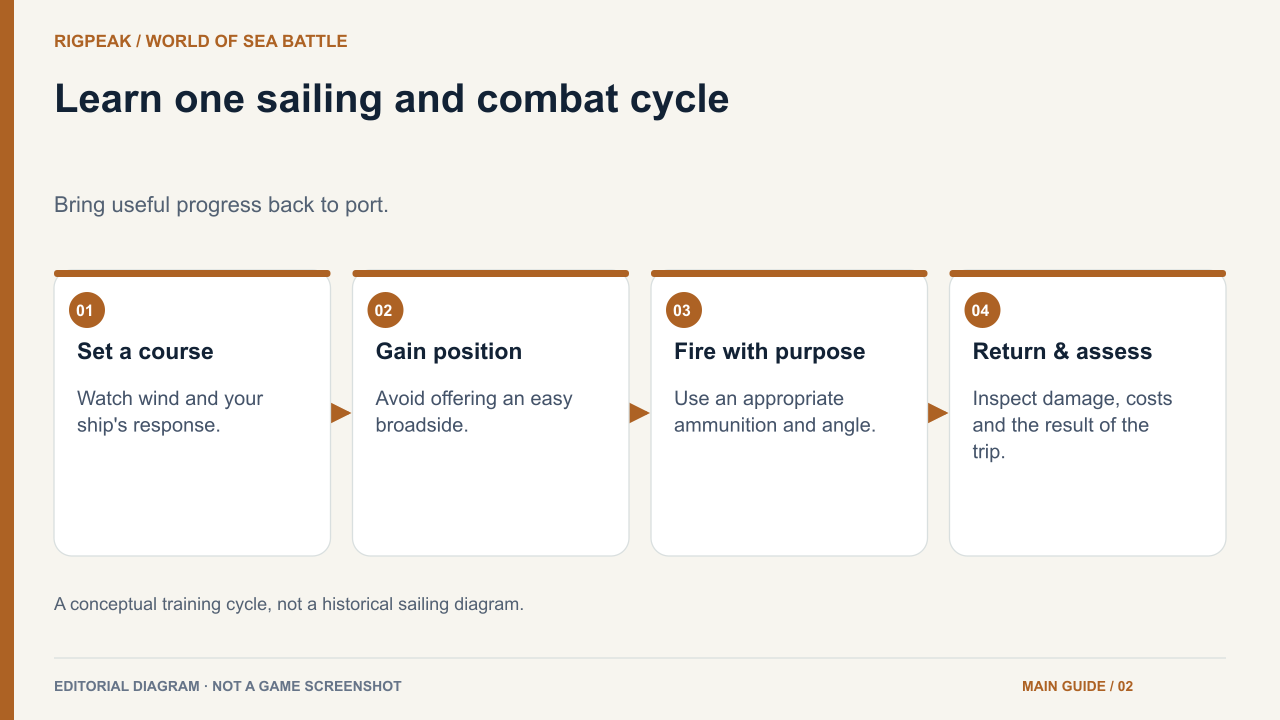
Choose ammunition for the effect you want
Ammunition types have different purposes. The official overview describes round shot for hull damage, bar shot against sails and grapeshot against crews.
Check what your present vessel can equip and use. Damaging sails can serve a different tactical goal from trying to sink the hull quickly. A round with an impressive description is not automatically the best option for the problem in front of you.
Practise with ordinary engagements and observe the result. Avoid basing your choice only on a number while ignoring the target and the effect you need.
Review the return, not just the victory
When you reach port, compare rewards with the cost of the voyage and recovery. If an activity produces frequent expensive damage, it may be unsuitable as your regular early route.
Use a simple log in your head: destination, cargo or target, outcome and the one mistake you want to correct. Repeating a short route makes those comparisons easier.
| What happened? | Next adjustment |
|---|---|
| You struggled to bring guns onto the target | Practise heading and turning before another difficult fight |
| Opponent controlled the engagement distance | Reconsider approach, wind and the effect of your ammunition |
| Voyage cost more than expected | Inspect recovery, preparation and cargo risk |
| A trade trip was too exposed | Use a shorter or better-understood route |
| Bigger ship feels harder to use | Return to manoeuvring practice instead of adding another upgrade |
Choose an upgrade that fits your activity
A larger ship can change manoeuvring, equipment and cost. Read its role before treating size as the entire progression plan.
For trading, think about the route and the cargo you intend to carry. For fighting, think about how you will bring the weapons into position. For mixed play, accept that a compromise may be necessary.
Do not spend your whole reserve on the hull if you cannot comfortably prepare and use it afterward.
Join other captains without losing track of the rules
Flotillas and guilds add coordinated activities and territorial interests. Start by learning how your group communicates and what a new captain can contribute.
The game remains in active development. Read current rules for the activity, cargo and losses rather than importing assumptions from another naval game. Shared water does not mean every encounter has the same risk or reward conditions.
Your first dependable milestone is a complete voyage: prepare in port, sail with control, complete the objective and return with a result you understand. Build your fleet around that competence.